
Drinking salt water helps replenish essential sodium and electrolytes lost through sweat during physical exertion. This practice optimizes cellular hydration, prevents premature fatigue, avoids muscle cramps, and reduces the risk of hyponatremia. Using unrefined mineral salt ensures the body absorbs these nutrients in a balanced and healthy way.
To understand its effectiveness, it is essential to analyze how sodium interacts with our body during sports activity.
What is salt water used for in an athlete's body?
During intense or prolonged workouts, the body regulates its temperature by sweating, losing water and minerals.
The mineral most lost through sweat is sodium. This electrolyte is responsible for maintaining fluid balance in the extracellular space. Without a sufficient amount of sodium, ingested water cannot be retained in the bloodstream or adequately penetrate the tissues.
In addition, sodium is essential for transmitting nerve impulses that order muscle fibers to contract and relax. When levels of this mineral drop drastically, neuromuscular communication is altered, leading to an immediate decrease in performance.
The benefits of salt water for athletes
Strategic consumption of salt water offers direct physiological advantages that improve the body's response to exercise.
Prevention of fatigue and muscle cramps
Cramps are not always due to a lack of potassium, but to a sodium deficiency in the fluid surrounding the muscles. When this fluid is depleted, nerve endings become hyperexcitable, triggering involuntary and painful contractions.
Restoring sodium with water and living salt allows muscles to function normally. In addition, by providing other minerals such as magnesium and potassium in the form of bioavailable minerals, systemic physical stress is reduced, and the onset of central fatigue is delayed.
Preventing hyponatremia due to overhydration
Drinking large amounts of plain water during a prolonged workout can be dangerous. This excess water dilutes the sodium in the blood, a medical condition known as hyponatremia.
Hyponatremia causes dizziness, mental confusion, muscle weakness, and, in severe cases, cerebral edema. Adding a small amount of salt to the water prevents this dilution, maintaining stable blood osmotic levels and ensuring proper cellular hydration.
Refined salt water versus spring salt water
Not all salts are suitable for preparing a sports hydrating drink. The quality of the mineral determines its assimilation.
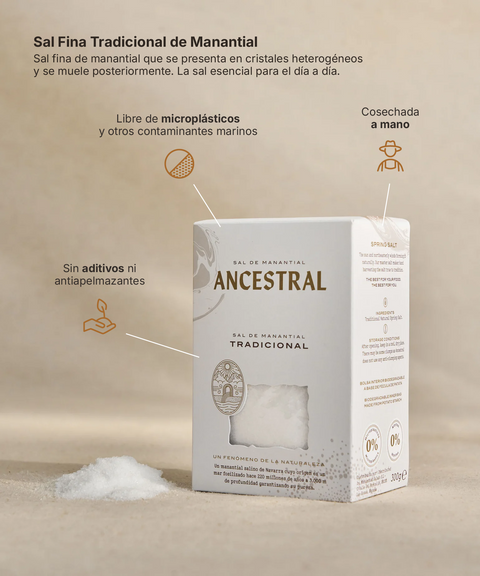
Common refined table salt is not suitable for athletes. This industrial product is stripped of its minerals and contains anti-caking additives such as sodium ferrocyanide (E-535). Introducing these chemicals into a body under physical stress hinders absorption and adds unnecessary toxins.
On the other hand, conventional sea salt currently carries the serious problem of marine pollution. Microplastic and heavy metal residues present in the ocean end up in your water bottle.
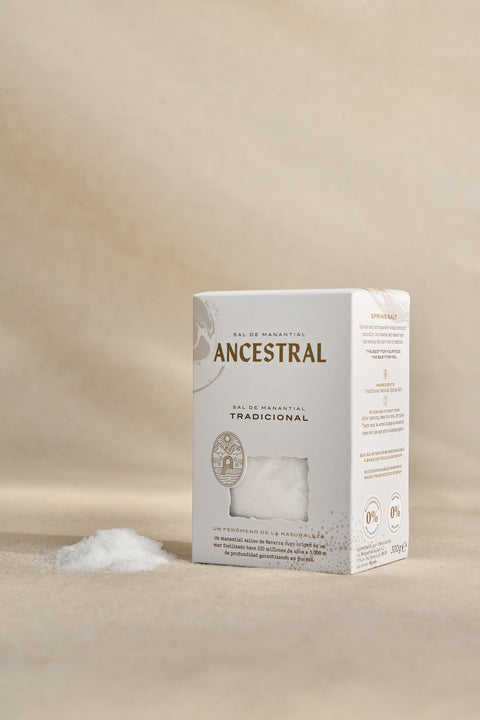
The best option is to use subterranean spring salt and of ancestral origin. Being protected from modern pollution by layers of underground rock, it is a clean, unrefined salt, artisanally dried in the sun. This salt provides trace elements that act synergistically to nourish your cells.

How to prepare the perfect homemade isotonic drink with Ancestral Salt
Making your own hydrating serum at home is simple and avoids the sugars and artificial colorings of commercial drinks.
To prepare one liter of natural isotonic drink, mix the following ingredients in a bottle:
-
One liter of pure mineral water.
-
Between 1 and 1.2 grams of Fine Ancestral Salt (approximately a quarter teaspoon).
-
The juice of half a lemon or a lime (provides potassium and vitamin C).
-
One tablespoon of raw honey or maple syrup (provides easily digestible carbohydrates).
Shake the mixture well until the crystals are completely dissolved. Consume it in small sips before, during, and after your most demanding training sessions to maintain your energy levels and prevent dehydration.
Frequently asked questions about drinking salt water in sports
Does drinking salt water raise blood pressure in athletes?
In active people who constantly lose sodium through sweat, replenishing it with salt water does not raise blood pressure. The body uses sodium immediately to restore blood volume and cellular function.
Should salt water be consumed during short workouts?
It is not necessary for exercise sessions shorter than 60 minutes, unless performed under conditions of extreme heat and humidity. For short workouts, plain water is sufficient.
Is it better than commercial sports drinks?
Yes. Commercial drinks often contain high amounts of refined sugars, artificial colorings, and flavorings. A homemade serum with Ancestral Salt provides clean and efficient hydration without harmful additives.