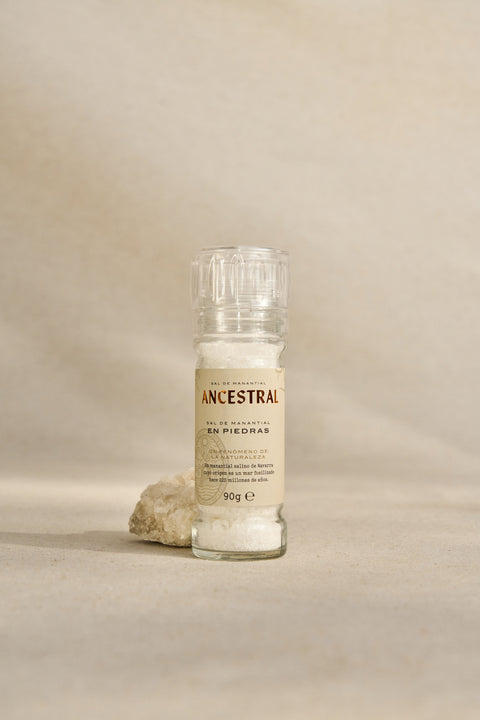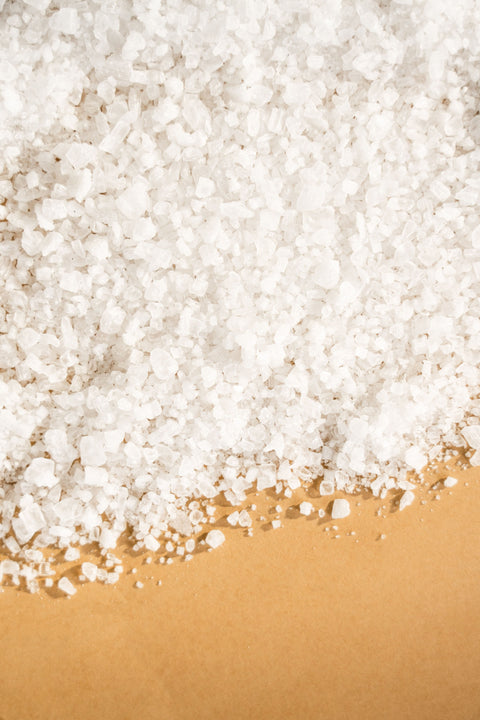

The key difference between refined and unrefined salt lies in their processing and chemical composition. Refined salt is almost pure sodium chloride (99%), stripped of its natural minerals and treated with bleaching and anti-caking additives. In contrast, unrefined salt retains its original structure with over 80 health-promoting and cell-hydrating bioavailable minerals.
To understand how this affects the body, it is essential to analyze the industrial refining process and its nutritional impact.
What is refined salt and how is it processed?
Refining is an extreme chemical and thermal treatment designed to whiten salt, extend its shelf life, and prevent caking.
During this industrial process, salt is heated to temperatures above 600 °C. This extreme heat destroys the physical structure of the mineral and removes any trace of trace elements. The result is a product composed almost entirely of isolated sodium chloride.
To make refined salt commercially attractive, chemical compounds are added. These include bleaching agents and synthetic anti-caking agents such as sodium ferrocyanide (E-535). These additives prevent moisture, but introduce artificial substances unnecessary for our bodies.
Unrefined salt: underground spring vs. sea salt
Salts that do not undergo refining retain their natural state, but their origin determines their purity and environmental impact.
The minerals of living salt
Fossil salt from underground springs is extracted from ancient aquifers formed millions of years ago. It is harvested by hand and dried exclusively by the sun and wind, in a completely artisanal way.
This passive method respects the original product, maintaining a living salt with over 80 essential trace elements. Minerals such as magnesium, potassium, and calcium are preserved intact in their bioavailable form. This mineral synergy helps regulate the physiological functions of the human body in a balanced way.
The problem of microplastics in the oceans
Unlike underground salt, common sea salt is obtained by evaporating water from today's oceans. Even if it is not refined, sea salt carries with it the modern contamination of our century's waters.
Recent scientific studies warn about the constant presence of microplastics and heavy metals in daily consumption sea salts. Consuming unrefined sea salt provides minerals, but also introduces invisible plastic particles into your body. The only way to avoid this is to choose a salt that comes from an ancestral origin protected underground.
Health impact: cellular hydration vs. fluid retention
The consumption of pure sodium chloride from refined salt alters the fluid balance in the body, forcing the body to react.
When we ingest refined salt, the body detects an excess of isolated sodium that it cannot easily assimilate. To counteract this high concentration and protect cells, the body retains water. This leads to hypertension, renal overload, and fluid retention in the tissues.
In contrast, unrefined spring salt provides an electrolyte balance. The natural presence of potassium and magnesium facilitates proper cellular hydration. These minerals help water penetrate cells instead of accumulating outside them, promoting systemic well-being.

Practical guide: how to read labels to recognize refined salt
Identifying quality salt in the supermarket requires carefully examining the ingredients section on the packaging.
-
Check the ingredients: Pure salt should have "salt" or "spring salt" as its only ingredient. If the list includes anti-caking agents such as E-535 or sodium ferrocyanide, you are looking at a refined and industrialized product.
-
Avoid the term "refined" or "artificially iodized": The synthetic addition of iodine and fluoride is often a sign that the salt has previously been stripped of its natural nutrients.
-
Analyze the color and texture: Extremely white and uniform salt is a symptom of chemical bleaching. Natural unrefined salts show slightly grayish or pinkish tones or irregular textures due to their mineral richness.
The next time you prepare your daily meals, try replacing common table salt with Ancestral Salt. Not only will you enhance the flavor of your recipes with a clean and artisanal condiment, but you will also be guaranteeing real cellular hydration for your family, free of microplastics and chemical additives.
Frequently asked questions about refined and unrefined salt
Is it bad to consume refined salt every day?
Daily consumption of refined salt can overload the kidneys and promote fluid retention due to the absence of other minerals that balance sodium. It is preferable to opt for complete and living salts.
Does unrefined sea salt have microplastics?
Yes, the vast majority of current commercial sea salts contain traces of microplastics and synthetic fibers due to global ocean contamination.
Why isn't unrefined salt perfectly white?
The color nuances (grayish, beige, or pinkish) and irregular crystals are the direct result of the presence of natural minerals such as iron, magnesium, and silicon that have not been industrially removed.